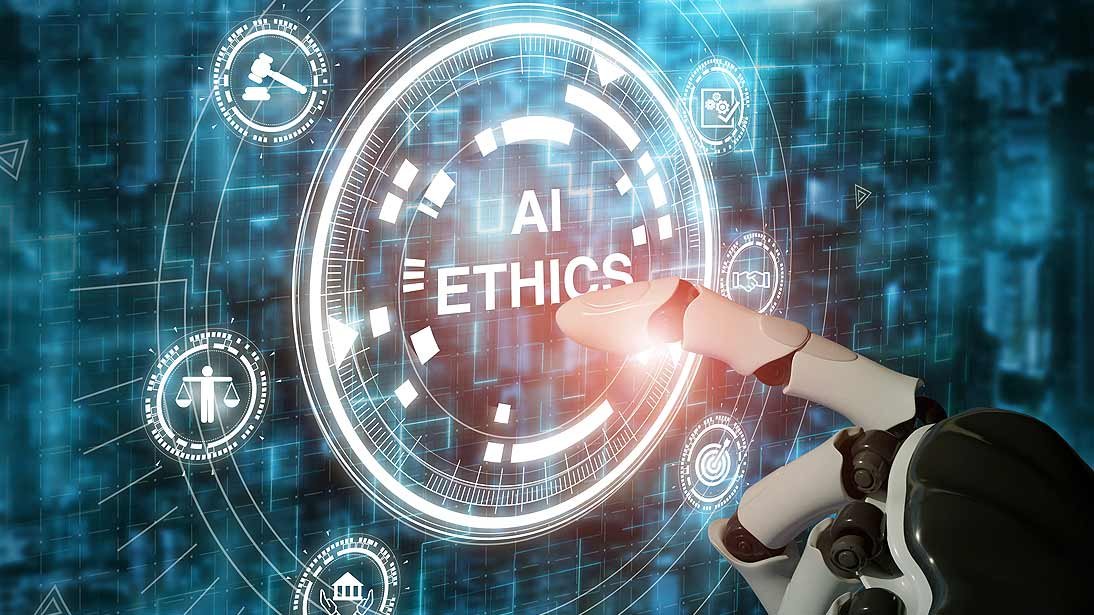
In the dynamic, often dazzling realm of digital creation, a new medium has emerged, challenging our very definitions of art, artist, and ownership: AI art. Where algorithms learn to paint, compose, and write, the canvas of creativity is expanding at an unprecedented pace. But beneath the vibrant pixels and innovative forms lies a complex web of Ethical & Safety Considerations in AI Art that demand our immediate attention and thoughtful navigation. Ignoring these concerns isn't an option; understanding them is crucial for anyone engaging with, creating, or simply appreciating this revolutionary field.
At a Glance: Key Considerations in AI Art
- Authorship & Ownership: Who truly owns AI-generated art—the artist prompting, the programmer, or the AI itself? Current laws struggle to keep up.
- Intellectual Property (IP): Existing copyright frameworks, designed for human creativity, often don't apply, leaving AI art in a legal gray area.
- Impact on Human Artists: AI presents both disruption (job displacement, market saturation) and new opportunities (collaboration, tools for innovation).
- Bias & Discrimination: AI models, trained on vast datasets, can unwittingly perpetuate harmful stereotypes in their artistic outputs.
- Originality & Devaluation: Concerns about art homogenization, mimicking existing styles, and diminishing the perceived value of human skill.
- Solutions: The path forward requires clear guidelines, transparency, updated legal frameworks, and ongoing collaboration among all stakeholders.
The Canvas of Tomorrow: What is AI Art, Anyway?
Imagine giving a computer a vague idea—"a cyberpunk cityscape at sunset," "a serene forest with bioluminescent fungi," or "a portrait in the style of Van Gogh, but with cats"—and watching it generate a stunning visual interpretation in seconds. This is the magic of AI art. It’s an emerging field where artificial intelligence, powered by advanced machine learning and neural networks, creates visual, auditory, or even textual art.
These sophisticated systems don't just randomly generate images; they analyze colossal datasets of existing art, learning to identify patterns, styles, and intricate relationships between colors, shapes, and compositions. By understanding "what makes a painting look like a painting," or "what makes a song sound like jazz," the AI learns to mimic existing artistic styles, create entirely new forms, or ingeniously combine elements. Human artists typically guide these AI systems through prompts—textual descriptions, reference images, or even code—acting as a conductor to the AI's orchestra.
While it feels cutting-edge, the concept isn't entirely new. Pioneering AI artist Harold Cohen's AARON program began generating abstract compositions using rules and algorithms back in the 1970s. More recently, projects like Google's DeepDream captured public imagination by using deep learning to visualize neural networks, producing mesmerizing, dreamlike imagery. Today, AI art manifests in diverse forms, from hyper-realistic digital paintings and illustrations to compelling musical compositions across genres, and even evocative poetry or interactive narratives. It’s a powerful tool, but like any powerful tool, it comes with a responsibility to wield it wisely.
Drawing the Lines: Core Ethical Considerations in AI Art
As AI art rapidly integrates into our creative landscape, it unearths fundamental questions about the nature of art, creation, and value. These aren't just philosophical debates; they have tangible implications for artists, developers, legal systems, and society at large.
Whose Hand on the Brush? Authorship and Ownership in the AI Era
Perhaps the most immediate and complex ethical quandary in AI art is determining who truly deserves credit and ownership. When an AI generates a stunning piece, who is the "artist"? Is it:
- The User/Prompt Artist: The individual who conceived the idea, crafted the prompts, and guided the AI to its final output? They provide the creative direction, making choices that steer the AI.
- The Programmer/Developer: The individual or team who built the foundational algorithms, curated the training data, and engineered the AI system itself? Without their technical prowess, the AI wouldn't exist.
- The AI Itself: As AI becomes increasingly sophisticated, producing unexpected and highly original outputs, can we consider it an autonomous creator deserving of some form of recognition, if not ownership?
The current paradigm struggles with these distinctions. Consider the seminal case of the 2018 sale of the AI-generated portrait "Edmond de Belamy." Created by the French art collective Obvious, using an algorithm trained on historical portraits, it fetched an astonishing $432,500 at Christie's. While a landmark moment for AI art, it vividly highlighted the complexities: Who received the proceeds? The collective. But what about the original developers of the underlying Generative Adversarial Network (GAN) algorithm, or the countless artists whose works formed the AI's training data? This blurring of lines underscores a critical need for new frameworks that acknowledge the multifaceted contributions to AI-generated art.
The Copyright Conundrum: Navigating IP in a Machine-Made World
Current intellectual property (IP) and copyright laws were primarily established for human creators. A cornerstone of copyright protection is the requirement of "human authorship"—the idea that a work must originate from a human mind to be eligible for protection. This standard immediately places AI-generated art in a legal gray area.
In the United States, for example, the Copyright Office has explicitly denied copyright protection to works generated solely by AI, even in cases where a human artist provided prompts. Their stance is that a human must make the "creative choices and final execution." While this position is being contested and debated, it highlights a significant challenge. Without clear copyright, who can protect AI art from unauthorized reproduction or derivative works? Conversely, how do we prevent AI from inadvertently infringing on existing human copyrights when it's trained on vast datasets that may include copyrighted material?
Adjustments to IP laws aren't just about protecting AI-generated works; they're also about ensuring fair attribution and protection for all parties involved, including the human artists whose styles or works might be mimicked. This complex issue requires a global conversation, moving beyond outdated definitions to accommodate the realities of algorithmic creativity.
Beyond the Algorithm: The Human Element and Market Impact
The rise of AI art has sparked a familiar fear: job displacement. Many human artists worry that increasingly affordable and available AI-generated art could disrupt the art market, potentially reducing opportunities for traditional creators. Why commission a portrait for hundreds or thousands when an AI can generate dozens of iterations for a fraction of the cost, or even for free?
This concern is valid. Industries from illustration to graphic design, concept art, and even photography are already feeling the tremors. However, it's also crucial to see the other side of the coin. AI art can create new avenues for collaboration and innovation. For many artists, AI isn't a replacement but a powerful tool, an infinitely patient assistant that can accelerate ideation, handle repetitive tasks, or allow them to explore styles and concepts that were previously too time-consuming or technically demanding.
Artists who adapt and leverage AI as a sophisticated brush or a creative partner may gain a competitive edge, opening up new markets and creating entirely new forms of art that were impossible before. The art market is undeniably in flux, with varying levels of acceptance for AI-generated works. The key lies in viewing AI not as an adversary, but as a catalyst for evolution, prompting human artists to redefine their unique value proposition in an increasingly automated world.
Painting with Prejudice: Addressing Bias and Discrimination
AI algorithms are only as unbiased as the data they are trained on. If a large dataset of existing art primarily features specific demographics, styles, or cultural perspectives, the AI will learn and perpetuate those biases. This means AI-generated art can inadvertently replicate and even amplify harmful stereotypes and discrimination.
For instance, an AI trained predominantly on datasets featuring Western art might struggle to generate diverse cultural representations accurately or respectfully. If trained on images where certain professions are almost exclusively depicted by one gender, the AI will continue that association. This isn't a flaw in the AI's "intent" (as it has none), but a direct reflection of the biases embedded in human history and the data we feed these systems. The danger is that these biases, once encoded, become invisible and pervasive, subtly shaping our visual culture and reinforcing existing inequalities.
Addressing this requires careful curation of training data, active efforts to identify and mitigate biases, and the development of "fairness" metrics for AI art generators. Without these safeguards, AI art risks becoming a powerful engine for propagating prejudice rather than expanding creative horizons. When exploring advanced image generation, especially for specific types of imagery, understanding these biases becomes even more critical. You can learn more about how ethical considerations play out in tools that create sexy AI images for example, where bias in training data can lead to problematic or stereotypical outputs.
The Soul of the Machine: Originality, Imitation, and Devaluing Skills
Beyond the technical and legal challenges, AI art raises profound questions about the very essence of creativity. When an AI can effortlessly mimic the styles of master artists, combine disparate elements, or generate "original" works at lightning speed, what happens to our perception of human creativity and the value of traditional artistic skills?
Some worry about the potential for homogenization of artistic expression. If everyone is using the same popular AI models, will art become generic, losing its unique human touch and diverse perspectives? There's also the concern about the "devaluation" of traditional artistic skills—years of practice, mastery of technique, and unique artistic vision. If a machine can replicate the appearance of skill without the human effort, does it diminish the perceived worth of that effort?
Furthermore, the mimicry aspect of AI poses a direct challenge to originality. While AI doesn't "understand" copyright, it can certainly reproduce elements of copyrighted works or generate art "in the style of" a living artist, blurring the lines of what constitutes inspiration versus infringement. The ethical compass here points towards responsible innovation: using AI to augment, not to simply copy or devalue, the human creative spirit.
Shaping the Future Canvas: Actionable Strategies and Solutions
The intricate challenges posed by AI art are not insurmountable. By fostering proactive dialogue and implementing thoughtful frameworks, we can steer this powerful technology towards a future that balances innovation with responsibility.
Crafting Clear Canons: Establishing Guidelines and Best Practices
For both artists and developers, clarity is paramount. Establishing clear guidelines and best practices for the creation, use, and attribution of AI art is a crucial first step. These guidelines could include:
- For Artists: Recommendations on disclosing AI use, ethical sourcing of training data (if personal datasets are used), and acknowledging algorithmic contributions.
- For Developers: Best practices for data governance, bias auditing in training sets, implementing transparency features, and designing AI tools that promote ethical use.
These "canons" can evolve from industry standards, professional associations, and even user communities, creating a shared understanding of responsible conduct.
The Art of Transparency: Giving Credit Where It's Due
Transparency isn't just a buzzword; it's a foundational principle for ethical AI art. Audiences, collectors, and other artists deserve to know when AI has been used in the creation of an artwork. This involves:
- Clear Disclosure: Labels or metadata indicating "AI-assisted," "AI-generated," or "AI-co-created" can help clarify the nature of the work.
- Proper Attribution: Acknowledging the human artists who provided prompts, the developers who built the algorithms, and even the specific AI models used can ensure all contributors receive appropriate credit.
- Provenance: Documenting the generative process, from initial prompts to AI iterations and human refinements, can establish a clearer provenance for AI-generated works.
Transparency builds trust and educates the public, allowing for informed appreciation and critical engagement with this new art form.
Rewriting the Rulebook: Legal and Regulatory Frameworks for AI Art
Existing legal frameworks, particularly in IP and copyright, are simply not equipped for the nuances of AI art. Developing new legal and regulatory frameworks is essential to:
- Redefine Authorship: Create new categories or interpretations of authorship that recognize the role of AI in creation, alongside human guidance.
- Update Copyright Laws: Explore mechanisms for copyright protection for AI-generated works, perhaps based on the level of human intervention, or introduce new forms of sui generis (unique) protection.
- Address Infringement: Establish clear guidelines on how AI-generated works can be trained without infringing on existing copyrights, and how to address instances where AI outputs too closely resemble copyrighted human works.
- Mandate Transparency and Accountability: Legislate requirements for disclosing AI use and hold developers and users accountable for biased or harmful outputs.
This will likely require an iterative process, involving pilots, policy debates, and international collaboration to create adaptable and equitable laws.
A Collaborative Masterpiece: Fostering Dialogue and Stakeholder Engagement
No single entity holds all the answers. The most robust solutions will emerge from ongoing dialogue and collaboration among all stakeholders:
- Artists: To articulate their concerns, share their innovative approaches, and help define the artistic value proposition in the AI age.
- Developers and Technologists: To explain the capabilities and limitations of AI, and to build ethical considerations into their tools from the ground up.
- Policymakers and Legal Experts: To translate ethical principles into actionable laws and regulations.
- Ethicists and Academics: To provide frameworks for critical thinking and moral guidance.
- Art Institutions and Collectors: To shape market acceptance and valuation standards.
Regular forums, workshops, and interdisciplinary research initiatives can help bridge knowledge gaps and collectively chart a responsible course for AI art.
Navigating the Ethical Landscape: Common Questions & Misconceptions
The advent of AI art naturally sparks many questions. Let's address some of the most common ones.
"Is AI art 'real' art?"
This is a deeply philosophical question with no single right answer. If art is defined by its ability to evoke emotion, challenge perceptions, or reflect the human experience, then AI art certainly can. If art is strictly defined by human intent and manual execution, then it might be viewed differently. Many argue that the human element of prompt engineering, curation, and artistic selection makes it art, albeit a new form of it. Ultimately, the definition of art has always evolved with new technologies, from photography to digital painting. AI art is simply the latest frontier.
"Will AI replace all human artists?"
Highly unlikely. While AI can automate certain tasks and generate aesthetically pleasing images, it currently lacks genuine consciousness, subjective experience, or the intrinsic motivation that drives human creativity. AI is a tool, not a sentient creator. Human artists bring unique life experiences, cultural perspectives, emotional depth, and intentional storytelling that AI, for now, cannot replicate. AI will likely shift the landscape, making some tasks obsolete while creating new roles for "AI artists," curators, and collaborators who wield these tools masterfully. Think of it less as replacement and more as evolution.
"Can I copyright AI art?"
In many jurisdictions, particularly the US, current law denies copyright protection to works generated solely by AI due to the "human authorship" requirement. However, if a human artist has sufficiently guided, modified, or curated the AI's output in a creative way, adding their own "original human expression," portions of that work might be eligible for copyright. The key is the level of human creative control exercised over the final piece. This is an active area of legal debate and policy development, so the answer may evolve.
"How can I ensure my AI art isn't biased?"
It's incredibly challenging, but conscious effort helps. Start by questioning your dataset if you're training your own model. Are the images diverse in terms of race, gender, culture, body type, and style? If using a public model, be aware of its likely biases and actively use prompts that counteract them. Experiment with diverse prompts, styles, and subjects. Critically evaluate the AI's outputs for stereotypical representations and refine your prompts to achieve more inclusive results.
Your Role in the Masterpiece: Moving Forward Responsibly
AI art isn't just a technological marvel; it's a cultural phenomenon that demands our engagement. As creators, consumers, and citizens, we all have a role to play in shaping its future. Don't shy away from this revolution; instead, lean into it with curiosity and a critical eye.
Educate yourself about the tools and the ethical debates surrounding them. If you're creating AI art, strive for transparency in your process and thoughtful consideration of your inputs and outputs. If you're appreciating AI art, ask questions about its origins and the intent behind its creation. Support initiatives that advocate for fair use, proper attribution, and robust legal frameworks.
The ethical and safety considerations in AI art aren't roadblocks to innovation; they are the guardrails that ensure this powerful new form of expression develops responsibly, inclusively, and in a way that truly enriches our shared human experience. By actively participating in this conversation, we can help paint a future where AI art flourishes as a testament to both human ingenuity and our collective commitment to ethical progress.