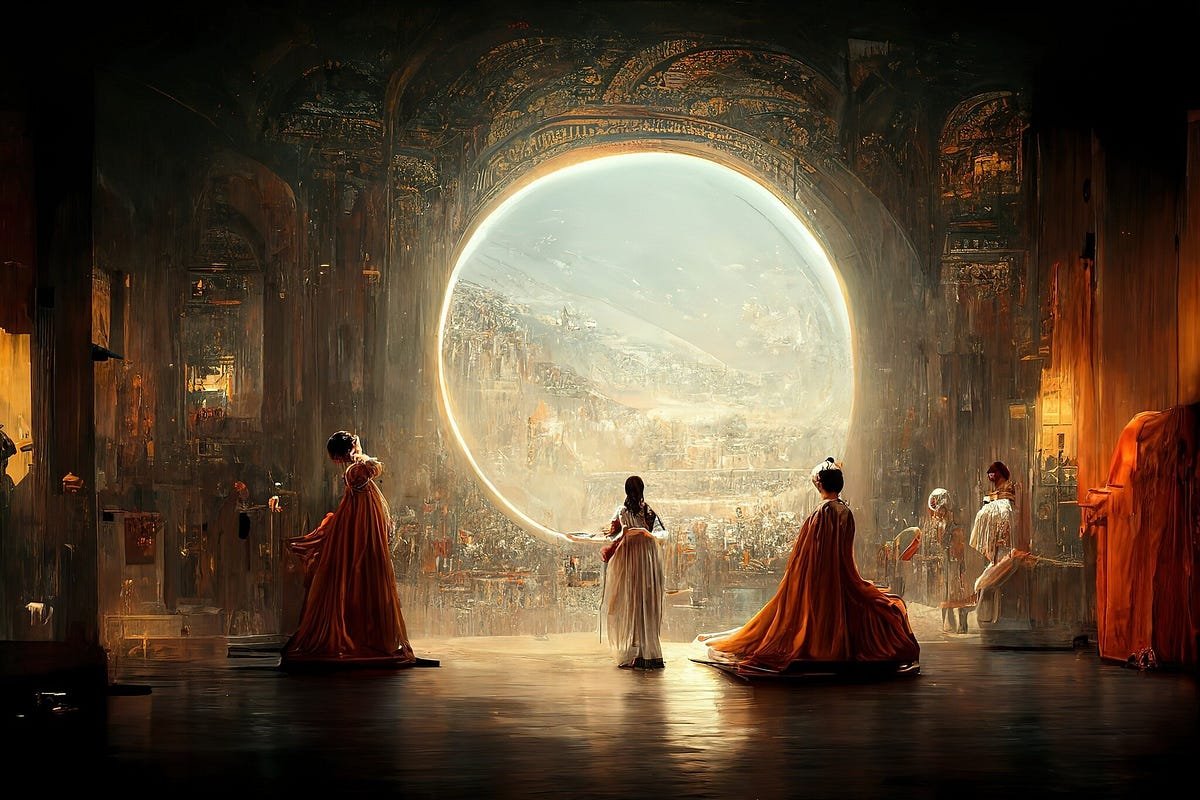
It wasn't long ago that the idea of a machine generating intricate, original artwork felt like science fiction. Yet, today, countless dazzling images flood our digital spaces, born not from human hands, but from complex algorithms. Understanding AI Art Generation Technology is no longer a niche pursuit; it's becoming a fundamental skill for anyone engaging with digital media, art, or even just appreciating the cutting edge of innovation. This technology is rapidly redefining creative boundaries, sparking both awe and debate, and empowering a new generation of artists and enthusiasts.
From captivating digital paintings to photorealistic scenes that blur the line with reality, AI art is here, and it's evolving at an astonishing pace. Whether you're a curious beginner looking to conjure your first image or a seasoned artist exploring new tools, grasping the core concepts behind this revolution is your first step.
At a Glance: Your Quick Guide to AI Art
- What is it? AI art is visual artwork created or enhanced by artificial intelligence programs, predominantly text-to-image models.
- A Long History: Automated art-making isn't new; it traces back to ancient automata, with AI in art emerging shortly after the field's founding in 1956.
- The 2020s Boom: Widely available tools like Midjourney, DALL-E, and Stable Diffusion democratized AI art, making it accessible to millions.
- How it Works (Simply): You describe what you want (a "prompt"), an AI model processes this, "imagines" the visual, and generates a unique image, often by iteratively refining random noise.
- Key Technologies: Modern AI art largely relies on deep learning, particularly Generative Adversarial Networks (GANs) and, more recently, Diffusion Models.
- Beyond Still Images: The technology now extends to generating videos, 3D models, and even assisting with music and animation.
- Essential Skills: "Prompt engineering" – learning how to effectively communicate your vision to the AI – is crucial for generating high-quality results.
- Big Debates: AI art has ignited discussions around copyright, authorship, ethical use, and the very definition of human creativity.
- No Artistic Skill Required: One of its biggest draws is the ability for anyone to create stunning visuals without traditional artistic training.
The Dawn of Digital Creativity: A Historical Perspective
The notion of machines creating art might feel contemporary, but its roots stretch back centuries. Automated art, in its broadest sense, can be found in the intricate mechanisms of ancient Greek automata. Fast forward to the 19th century, and the visionary Ada Lovelace predicted that computing machines could one day generate creative works beyond mere calculations. Alan Turing’s seminal 1950 paper, "Computing Machinery and Intelligence," then laid much of the philosophical groundwork for what would become artificial intelligence itself.
The field of AI was formally established in 1956 at Dartmouth College. It wasn't long before artists and scientists began experimenting with this nascent technology to push creative boundaries. Early AI art was often known by various names: algorithmic art, computer art, digital art, or new media art. These initial explorations, though rudimentary by today's standards, were profound in their implications.
One of the earliest and most influential figures was Harold Cohen with his program AARON. Developed in the late 1960s at UC San Diego, AARON used symbolic, rule-based approaches to generate technical images. Its significance was recognized early on, with an exhibition at the Los Angeles County Museum of Art in 1972, and remarkably, another at the Whitney Museum of American Art in 2024, showcasing its enduring legacy.
The 1980s saw Karl Sims creating art with artificial life, earning him multiple Golden Nica awards. His work demonstrated how AI could evolve and create complex, organic forms. Later, in 1999, Scott Draves and his team released Electric Sheep, a free software screensaver that used volunteer computing and AI to animate and evolve fractal flames, earning the Fundacion Telefónica Life 4.0 prize in 2001. These projects moved beyond static images, exploring dynamic and evolving forms of AI-generated visuals.
As AI capabilities grew, so did the diversity of its artistic applications and the recognition it received. Stephanie Dinkins in 2014 created "Conversations with Bina48," an AI based on the "interests and culture(s) of people of color," earning her a Creative Capital award in 2019. Similarly, Sougwen Chung began her "Mimicry" project in 2015, collaborating with a robotic arm to create art, which won the Lumen Prize in 2019. These artists explored human-AI collaboration and AI's role in reflecting cultural identity.
A significant turning point in public perception occurred in 2018 when the Obvious collective's AI artwork, "Edmond de Belamy," sold for an astonishing US$432,500 at Christie's, far exceeding its estimate. This event catapulted AI art into mainstream headlines, forcing the art world to grapple with its implications.
Today, AI art isn't just for experimental pieces; it's becoming an integral part of commercial productions. Recent Japanese film "generAIdoscope" (2024) and anime series "Twins Hinahima" (2025) have notably utilized AI for various aspects of video, audio, music, and animation assistance, showcasing its burgeoning role in entertainment.
Unpacking the Engine: How AI Art Generation Works
The rapid advancements in AI art over the last decade owe much to the rise of deep learning, a subset of machine learning characterized by multi-layer neural networks. These networks, inspired by the human brain, can learn incredibly complex patterns from vast datasets. For art generation, the goal is often to create something new and aesthetically pleasing, a process driven by sophisticated generative models.
The Early Architects: GANs and DeepDream
One of the pivotal breakthroughs came in 2014 with Generative Adversarial Networks (GANs), introduced by Ian Goodfellow. GANs revolutionized generative AI by pitting two neural networks against each other: a "generator" and a "discriminator." The generator's job is to create new images, while the discriminator's job is to determine if an image is real (from the training data) or fake (generated by the generator). This adversarial process pushes both networks to improve, with the generator learning to produce increasingly realistic and aesthetically specific images, transcending hand-coded rules.
A year later, in 2015, Google's DeepDream captured public imagination. This tool used convolutional neural networks to find and enhance patterns within images, creating surreal, dream-like visuals filled with repeating animal forms and architectural elements. While not "generating" from scratch in the same way GANs did, DeepDream showcased the interpretive and transformative power of deep learning on existing imagery.
The Text-to-Image Revolution of the 2020s
The true game-changer, however, arrived in the 2020s with the widespread availability of text-to-image models. These systems allowed users to describe their desired image in natural language, and the AI would bring it to life. This marked a profound shift, making image generation accessible to anyone who could type.
- DALL-E 1 (OpenAI, 2021): This groundbreaking model was an autoregressive generative model, showcasing an incredible ability to generate images from diverse text prompts.
- VQGAN-CLIP (EleutherAI, 2021): An open-source alternative that leveraged OpenAI's CLIP model, demonstrating the power of combining different AI components.
But the real revolution in image quality and accessibility came with Diffusion Models. While proposed as early as 2015, significant improvements in early 2021 transformed them into the dominant paradigm.
Diffusion Models work by learning to reverse a process of gradually adding noise to an image. Imagine starting with a picture and slowly blurring it into pure static. A diffusion model learns to do the opposite: starting from random noise, it iteratively "denoises" the image, guided by a text prompt, until a coherent and high-quality image emerges. This process allows for incredible detail and photorealism.
Key developments in diffusion led to: - Latent Diffusion Model (December 2021): A more efficient variant that performs the diffusion process in a compressed "latent" space, making it faster and less computationally intensive.
- Stable Diffusion (August 2022): A collaborative effort by Stability AI, CompVis Group, and Runway, Stable Diffusion quickly became a cornerstone of the AI art movement due to its open-source nature, high quality, and efficiency.
- Midjourney (2022): Known for its distinctive artistic aesthetic and user-friendly interface, Midjourney rapidly gained a massive following.
- Imagen & Parti (Google Brain, May 2022): Google's contributions demonstrated impressive capabilities in photorealism and understanding complex prompts.
- NUWA-Infinity (Microsoft), Ideogram (August 2023): Ideogram specifically became known for its ability to generate legible text within images, a common challenge for earlier models.
- Flux (Black Forest Labs, 2024): This model focused on highly realistic images and has been integrated into advanced AI systems like Grok and Le Chat.
- Aurora (Grok, December 2024): Further pushing the boundaries of image generation quality.
The evolution didn't stop at still images. The emergence of Multimodal & Video AI tools like Adobe Firefly and Microsoft Paint AI, alongside dedicated text-to-video models such as Runway's Gen-4, Google's VideoPoet, OpenAI's Sora (December 2024), and LTX-2 (2025), is transforming animation and filmmaking. OpenAI's GPT Image 1 (March 2025) further blurred lines by introducing advanced text rendering and multimodal capabilities, meaning it can understand and generate content across different formats.
From Idea to Image: Tools and Processes for AI Artists
Bringing your vision to life with AI involves more than just typing a few words. It's a blend of artistic intuition and technical understanding, especially concerning the tools and processes available.
The Core Modalities
AI art generation isn't a one-trick pony. Different models and platforms specialize in various approaches:
- Text-to-Image: The most common form, where you describe what you want, and the AI generates a visual.
- Image-to-Image: You provide an input image, and the AI transforms it into a new style, adds elements, or manipulates its form based on your prompts.
- Image-to-Video: Creating short video clips from a single input image, animating elements or moving the camera.
- Text-to-Video: The most advanced, generating entire video sequences directly from textual descriptions, moving beyond simple loops to complex narratives.
Crafting Your Vision: The Art of Prompt Engineering
The quality of your AI art often boils down to how well you communicate your intentions to the model. This skill is known as prompt engineering. When using diffusion models, artists fine-tune their output with a combination of elements:
- Positive Prompts: These are your core descriptions, telling the AI exactly what you want to see. The more detailed, descriptive, and imaginative, the better.
- Negative Prompts: Just as important, these tell the AI what you don't want. Think "blurry, low quality, deformed, ugly" to filter out common imperfections.
- Key Parameters:
- Guidance Scale (or CFG Scale): Controls how strongly the AI adheres to your prompt. A higher scale means more adherence but can sometimes lead to less creativity.
- Seed: A numerical value that determines the initial random noise from which the image starts generating. Using the same seed with the same prompt and settings will produce an identical image, useful for iteration.
- Upscalers: Algorithms that enhance the resolution and detail of a generated image after its initial creation, crucial for high-quality final outputs.
The Advanced Toolkit
For those looking to push boundaries, several advanced tools extend the capabilities of standard text-to-image models:
- VAEs (Variational Autoencoders): Components that influence how colors and details are rendered, often improving the overall aesthetic quality and realism of an image.
- LoRAs (Low-Rank Adaptations) and Hypernetworks: These are small, specialized model layers that can be applied to a base AI model to generate specific styles, characters, or objects consistently. They're like adding a specific artist's signature brushwork or a unique character design to your AI's repertoire.
- IP-adapter: Allows you to guide the AI with an image's style or content without replacing the prompt entirely, blending visual influence with textual commands.
- Embedding/Textual Inversions: Small files that teach the AI to understand a new concept or style based on a few example images, allowing you to use custom keywords in your prompts.
- Model Fine-tuning (e.g., DreamBooth): Techniques that allow you to train an AI model on your own dataset of images (e.g., photos of your cat, your personal art style) so it can generate images incorporating those specific elements.
The Broader Impact
The implications of AI art generation technology extend far beyond just creating pretty pictures:
- Expands Noncommercial Genres: Enthusiasts can rapidly explore niche aesthetics and fantastical concepts without traditional art production barriers.
- Enables Fast Prototyping: Designers and creatives can quickly generate concept art, mood boards, and visual mock-ups, significantly accelerating early-stage development.
- Increases Art Accessibility: It democratizes art creation, allowing individuals without artistic training to visualize their ideas.
- Provides Creative Tools: It acts as a powerful source of inspiration, offering endless variations and unexpected interpretations that can spark new ideas or serve as components for larger projects.
Mastering the Canvas: AI Art Generation for Beginners
Ready to dive in and create your own AI art? It's more straightforward than you might think, and you don't need a degree in computer science or a decade of art school. Here's how to get started.
Your First Steps: Key Components of AI Art Generation
Think of AI art generation as a creative collaboration between you and a very powerful digital assistant. Three main components drive this process:
- AI Models: These are the different "artists" you can choose from. Each model (like Midjourney, Stable Diffusion, DALL-E) has been trained on millions of images and, as such, has its own strengths, biases, and distinctive aesthetic. Some excel at photorealism, others at anime, and some at abstract painting. Experimenting with different models is key to finding your preferred style.
- Prompts: These are your instructions – the written descriptions that guide the AI. Think of them as the blueprint for your vision. The quality of your prompt directly impacts the quality and relevance of the generated image.
- Settings: These are the technical controls that allow you to fine-tune the image's quality, speed of generation, and stylistic adherence.
How it Works (Simplified): You write your prompt. The AI model processes your words, "imagining" the description based on its training data. It then starts with random noise and iteratively refines it, adding pixels step-by-step until your unique image appears.
The Prompting Playbook: Principles for Success
Effective prompting is an art in itself. Here's how to craft compelling instructions:
- Be Specific: Instead of "a dog," try "a golden retriever sitting in a park." The more detail you provide about the subject and its actions, the better the AI can visualize it.
- Use Descriptive Language: Employ evocative adjectives and adverbs. "A vibrant, ethereal forest illuminated by bioluminescent flora" will yield a much richer image than "a bright forest."
- Include Style Information: Specify the artistic style you're aiming for. Examples: "fantasy art," "digital painting," "cinematic photography," "oil on canvas," "in the style of [famous artist]." Don't forget quality terms like "highly detailed," "masterpiece," "8K," "sharp focus."
- Set the Scene: Provide context. Where is the subject? What's the lighting like? "Sunrise over a misty mountain range," "a dimly lit cyberpunk alley," or "underwater in a coral reef."
- Leveraging Negative Prompts: These are just as crucial as your positive prompts. Use them to tell the AI what you don't want. Common negative prompts include: "blurry, low quality, deformed, ugly, bad anatomy, malformed limbs, extra limbs, watermark, text, signature." This helps filter out common artifacts and improves overall quality.
Navigating Technical Controls
Most AI art platforms offer settings you can adjust:
- Quality Settings: These often correlate to the number of "steps" the AI takes to refine an image and the "CFG Scale" (guidance scale).
- Fast (e.g., 20 steps, 6.5 CFG): Quick for testing ideas, but might lack detail.
- Standard (e.g., 30 steps, 7.0 CFG): A good balance of speed and quality for most uses.
- High (e.g., 40+ steps, 7.5+ CFG): Maximizes detail and coherence but takes longer.
- Model Recommendations:
- AlbedoBase XL: A great all-around model for various styles.
- FLUX.1 [Schnell]: Excellent for speed and generating realistic images quickly.
- Juggernaut XL: A top choice for photorealism and highly detailed outputs.
- Image Sizes: Choose appropriate aspect ratios for your subject.
- Square (1024×1024): Ideal for portraits, icons, or balanced compositions.
- Portrait (896×1152): Best for characters, full-body shots, or magazine covers.
- Landscape (1152×896): Perfect for scenery, wide vistas, or concept art backgrounds.
Overcoming Common Hurdles
You'll inevitably encounter images that aren't quite right. Here are common problems and solutions:
- Blurry images:
- Solution: Add "sharp focus, highly detailed, photorealistic" to your positive prompt. Use "blurry, low quality, bad resolution" in your negative prompt. Increase quality settings (steps, CFG).
- AI misunderstanding your prompt:
- Solution: Be more specific. Break down complex ideas into simpler components. Use known reference terms (e.g., "Gothic architecture" instead of "spiky old buildings").
- Deformed figures or anatomy:
- Solution: Include "good anatomy, perfectly formed, symmetrical" in your positive prompt. Use "ugly, deformed, bad anatomy, extra limbs, missing limbs, mutated" in negative prompts. Simplify poses or try different models known for better anatomy.
- Incorrect colors:
- Solution: Explicitly state desired colors in your prompt (e.g., "crimson cloak," "emerald eyes"). Use color-related negative prompts if a specific hue keeps appearing unwantedly. Experiment with different models.
- Lack of artistry or "flat" images:
- Solution: Add artistic style terms ("cinematic lighting," "masterpiece," "award-winning," "concept art"). Reference specific artists (e.g., "in the style of Van Gogh"). Increase CFG scale slightly to make the AI adhere more strongly to artistic keywords.
As you explore the vast potential of AI art, remember that models are constantly evolving. Some are designed for general artistry, while others are highly specialized. For those interested in a specific, perhaps more niche, category of generative art, you might want to Explore the sexy AI generator to see what tailored models can produce. The key is continuous learning, experimentation, and engaging with the vibrant community of AI artists who share tips and tricks daily.
AI as Analyst: Understanding Art Through Algorithms
Beyond generating new art, AI is also proving to be an invaluable tool for analyzing existing art. It offers new, quantitative perspectives on artistic styles, influences, and even the emotional impact of masterpieces.
Think of AI as a tireless art historian, capable of processing vast amounts of visual data with unparalleled speed and precision. This capacity allows for methods like:
- Close Reading: AI can focus on specific visual aspects of individual pieces. This might involve tasks like computational artist authentication, where algorithms learn the unique "signature" of a painter's brushstrokes, or detailed brushstroke analysis that reveals underlying techniques and even psychological states.
- Distant Viewing: This method allows AI to visualize similarities and differences across entire collections. It can perform automatic classification of artworks by style, period, or theme, and even facilitate knowledge discovery in art history by identifying previously unnoticed connections or evolutionary trends.
AI algorithms can also be trained with synthetic images to aid in art authentication and forgery detection. By learning the subtle inconsistencies characteristic of forgeries or the precise stylistic nuances of genuine works, AI provides a powerful layer of protection against fraud in the art market. Furthermore, fascinating research using datasets like ArtEmis—which includes visual inputs and textual explanations from over 6,500 participants—has enabled machine learning models to predict human emotional responses to art. This capability hints at a future where AI could help us better understand the universal principles of aesthetic appeal and emotional resonance in art.
Navigating the Nuances: Ethics, Debates, and Responsible Use
The meteoric rise of AI art has, understandably, sparked intense debate and raised profound ethical questions. As with any powerful new technology, its integration into our lives requires careful consideration.
The Philosophical Crossroads: What is Art in the Age of AI?
One of the most fundamental questions concerns the very nature of art. If an AI can generate a masterpiece, does it diminish the human role? Many argue that AI-generated images undermine traditional human artistry, which has historically valued creativity, skill, intentionality, and personal experience. Critics wonder: Can a machine truly be creative? Does it possess intent or consciousness? These discussions force us to redefine what we value in art and where human-AI collaboration fits into that definition.
Interestingly, research indicates a human bias against artwork identified as AI-generated, regardless of its visual quality. This suggests that our perception of art is deeply intertwined with our understanding of its creator and the perceived effort involved.
Copyright and Ownership in a New Frontier
The legal and ethical implications surrounding copyright for AI-generated works are complex and largely unresolved. Who owns the copyright for an image created by an AI? The user who wrote the prompt? The developer of the AI model? The artists whose works were used to train the AI? These questions are at the forefront of legal discourse, with different jurisdictions proposing varying answers. The rapid growth of AI art in the 2020s has highlighted discussions on not just copyright, but also deception, defamation, and technological unemployment, particularly for commercial artists.
Responsible Creation: Guidelines for AI Artists
Navigating these challenges requires a commitment to responsible use. While specific laws and regulations are still evolving, a general framework for ethical AI art creation emphasizes:
- Creating Original, Inspired Artwork: The goal should be to generate new creations based on learned patterns and styles, rather than directly copying or plagiarizing existing human art. AI models are trained on existing images to learn patterns and styles, not to reproduce exact copies.
- Respecting Copyright and Trademarks: Be mindful of using copyrighted material or trademarked imagery in your prompts, especially for commercial use. Always check the terms of service for the AI tools you're using.
- Crediting AI Tools: Transparency is key. When sharing AI-generated art, it's good practice to credit the AI tools used, much like you would credit a brush manufacturer or software.
- Avoiding Harmful Content: Do not use AI to generate hateful, discriminatory, or unauthorized intimate content, or to create deepfakes that could defame or deceive.
- Considering Commercial Use: For images intended for commercial use, scrutinize the terms of service of your chosen AI model carefully. Some models offer commercial licenses, while others may have restrictions. Additional editing and human refinement often add value and clarity to commercial AI assets.
The debate isn't about whether AI art will exist, but how we, as a society, choose to integrate it responsibly. It's about finding a harmonious balance between technological innovation and upholding the values of human creativity and ethical conduct.
Charting the Future: Continuous Learning and the Evolving Landscape
The journey into Understanding AI Art Generation Technology is continuous. The field is still in its infancy, evolving at a pace that often feels dizzying. What's cutting-edge today might be commonplace tomorrow, and entirely new paradigms could emerge next year.
For anyone engaging with AI art, whether as a creator, consumer, or commentator, the key is a mindset of continuous learning and adaptation. Experiment with new models, explore different prompting techniques, and immerse yourself in the vibrant online communities where knowledge is shared and new frontiers are being explored daily.
The future of AI art promises even more intuitive tools, greater control, and deeper integration into creative workflows. From hyper-realistic simulations to entirely new aesthetic experiences, AI will undoubtedly continue to expand the horizons of what art can be. By staying informed, embracing responsible practices, and maintaining a healthy curiosity, you can actively participate in shaping this exciting new chapter in human—and artificial—creativity.